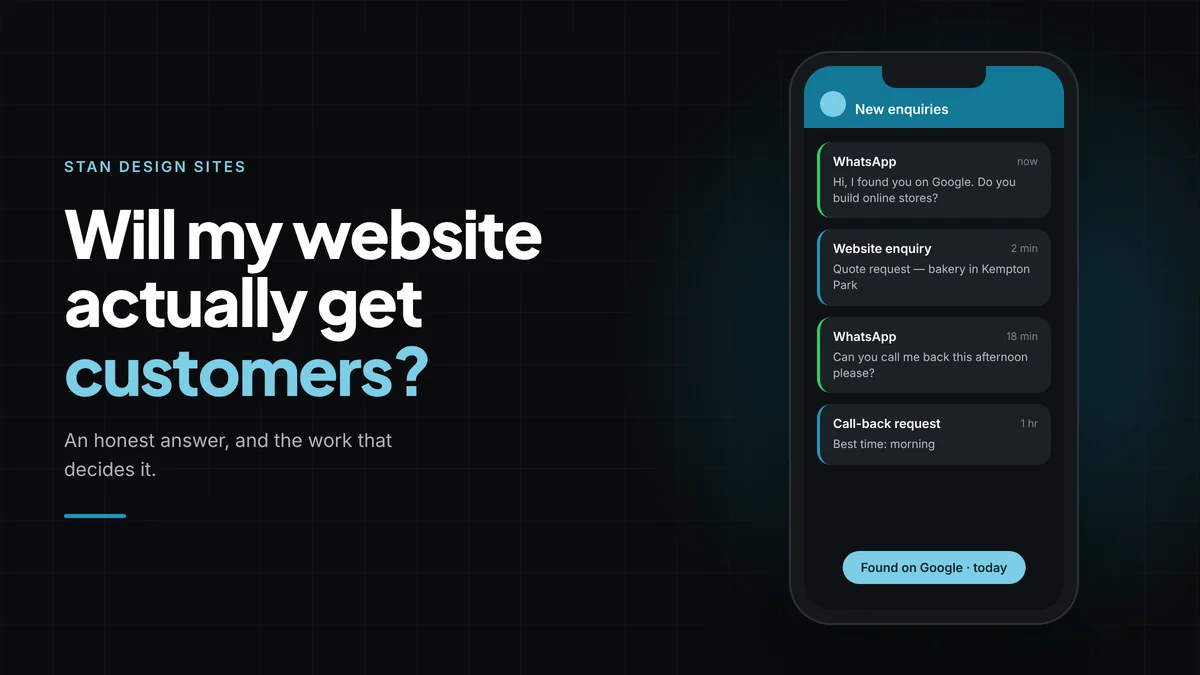
Will my website actually get customers?
If you are a business owner thinking about getting a website, you have probably asked yourself this question: will my website actually get customers?
It is a fair question. Building a website requires time and money, and you want to know whether that investment will help your business grow.
As the founder of Stan Design Sites, a web design and SEO agency in South Africa, I understand why business owners want to know what they can expect before investing in a website.
My honest answer is yes, a website can help you attract customers, generate enquiries and grow your business. However, simply having a website does not guarantee that customers will come.
Your website needs to be visible to the right people, provide useful information and make it easy for potential customers to contact you. This is where search engine optimisation, regular updates and a clear marketing strategy become important.
Why having a website is not enough
One mistake I believe business owners make is assuming that once their website is built, customers will automatically follow.
Imagine opening a physical shop in Johannesburg. You have excellent products, good service and competitive prices, but nobody knows where your shop is located. You could have a great business and still struggle to attract customers.
A website works in a similar way. You can have a professionally designed website, but if potential customers cannot find it on Google or understand what you offer, it may not generate the results you expect.
Your website needs more than an attractive design. It needs a strategy that helps people discover your business and take the next step. This includes:
- Search engine optimisation to improve your visibility on Google.
- Clear information about your products or services.
- Fast loading speeds so visitors can access your website without unnecessary delays.
- Simple ways for customers to call, send a WhatsApp message or submit an enquiry.
- Regular updates to keep your website useful and relevant.
- Trust-building information, such as customer testimonials, reviews and examples of your work.
A website should not simply exist online. It should serve a purpose in your business.
How SEO helps your website attract customers
One of the foundations I have worked on for my own business, Stan Design Sites, is search engine optimisation.
SEO helps search engines understand your website and its content. When your website is properly optimised, you improve its chances of appearing when people search for services related to your business.
For example, someone looking for a web designer in Johannesburg might search for phrases such as “website design Johannesburg” or “WordPress website designer in South Africa”. If you provide those services, you want your website to be relevant to those searches.
However, SEO involves more than adding a few keywords to your homepage. It requires ongoing work across several areas.
On-page SEO
On-page SEO involves optimising the content and elements on your website so that search engines and visitors can understand your pages. Some important elements include:
- Relevant keywords: use phrases that reflect the services you offer and what potential customers are searching for.
- SEO page titles: write clear, descriptive titles that accurately represent each page.
- Meta descriptions: create relevant descriptions that explain what visitors can expect from each page and encourage them to click through from search results.
- Headings: organise your content with clear headings that explain the main topics covered on each page.
- Useful content: answer the questions your potential customers are asking and explain how your products or services can help them.
- Internal links: connect related pages so visitors can discover more information about your business.
For example, if you offer plumbing services in Johannesburg, your website should clearly explain your plumbing services and the areas you serve. Your page titles, headings and content should reflect that information naturally. It is worth reading how to write a service page that actually ranks before you start.
The goal is not to fill every page with keywords. It is to make your website relevant, clear and useful to the people you want to reach.
Off-page SEO
Off-page SEO involves activities outside your website that can help build your business’s online authority and reputation. Depending on your business, these activities may include:
- Earning links from relevant and trustworthy websites.
- Getting your business listed in reputable industry directories.
- Building relationships with other businesses and organisations.
- Encouraging genuine customer reviews on appropriate platforms.
- Developing a consistent and trustworthy online presence.
These activities can help strengthen your website’s credibility, although results depend on your industry, competition and the quality of the work.
On-page and off-page SEO should complement each other. Neither guarantees first-page rankings or a particular number of customers.
Why your Google Business Profile matters
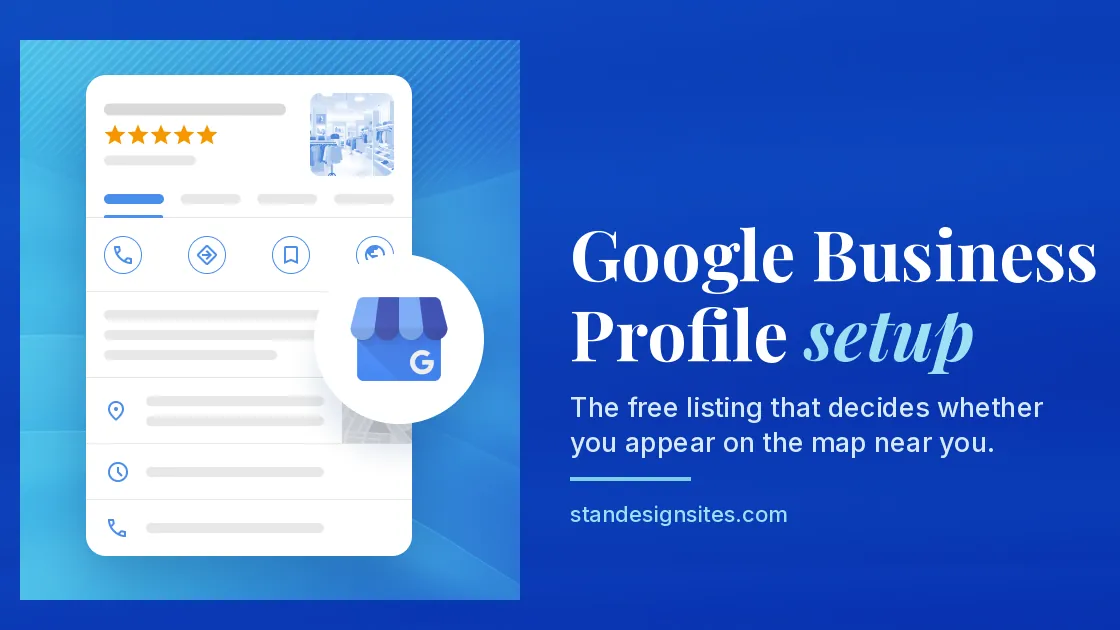
If you operate a local business, one of my key recommendations is to set up and maintain your Google Business Profile. Many business owners invest in a website but overlook this important part of their online presence.
A Google Business Profile helps eligible local businesses appear in Google Search and Google Maps. It can display useful information such as your business name, contact details, opening hours, photos, service areas and customer reviews.
Think about someone searching for a service near their home or workplace. They may not know your business name, but they know what service they need and where they need it. A well-maintained Google Business Profile can help that person discover your business.
How to make the most of your Google Business Profile
If you serve customers in Johannesburg, Pretoria or another area in South Africa, make sure your profile accurately reflects your business. Here are some practical steps:
- Complete your business profile with accurate information.
- Select the most appropriate primary and additional business categories.
- Add your website address and correct contact details.
- Specify your service areas if you operate as a service-area business.
- Upload genuine photos of your business, team, products or completed projects.
- Encourage satisfied customers to leave honest reviews.
- Respond professionally to reviews and customer questions.
- Keep your opening hours and other business details updated.
There is a full Google Business Profile checklist for South African businesses if you want to work through it properly.
Your website and Google Business Profile can work together. Your profile helps people discover your business, while your website gives them more information about your services, experience and how to work with you. Neither guarantees that every person who discovers your business will become a customer, but together they can strengthen your local online presence.
Why you should update your website consistently
Another important lesson from managing my own business website is the value of keeping it updated. Your website should reflect your current business, not simply what you offered when it was first launched.
Over time, your services may change, you may complete new projects, and customers may start asking different questions. Your website should evolve with your business. Regular updates can include:
- Adding new projects to your portfolio.
- Updating service descriptions and contact information.
- Publishing helpful blog articles.
- Improving outdated pages.
- Checking that contact forms and WhatsApp links work correctly.
- Reviewing website performance and fixing technical issues.
Updating your website does not mean changing something every day just to make it look active. Focus on meaningful improvements that help your visitors and support your business goals. If you would rather not think about it at all, this is exactly what website maintenance is for.
A well-maintained website gives potential customers more accurate information and helps you identify opportunities to improve the visitor experience.
How blogging can help you attract customers
Blogging is another practical way to support your SEO strategy.
Potential customers often search Google for answers before deciding which business to contact. If your website provides useful answers to those questions, you have an opportunity to introduce them to your business.
For example, at Stan Design Sites, topics related to website design and SEO can include:
- How much does a website cost in South Africa?
- Do you need a website if you already have Facebook and WhatsApp?
- How long does SEO take to produce results?
- Why is my website not appearing on Google?
- What should I look for when choosing a web designer?
- How can I get more enquiries through my website?
These topics are useful because they address questions potential customers may already have. A helpful blog post should explain the topic clearly, provide practical advice and guide readers towards a relevant service when appropriate.
Write for people, not just search engines
Publishing blog posts simply to include more keywords is not a good long-term strategy. Instead, focus on answering real questions, explaining common problems and helping readers make informed decisions.
For example, an article about why a business website is not generating enquiries could explain the importance of website speed, clear service information, local SEO, calls to action and tracking enquiries. You can then link to relevant service pages where readers can learn more about your web design or SEO services.
Consistency matters, but quality matters too. It is better to publish genuinely helpful articles than to fill your website with repetitive content that offers little value.
A fast website gives visitors a better experience
Website speed is another factor I pay attention to when managing a website. People expect websites to load quickly. If a page takes too long to load, some visitors may leave before they even see what your business offers.
A slow website can create a poor first impression and make it harder for visitors to browse your services or contact you. To improve website performance, consider:
- Compressing images before uploading them.
- Using appropriately sized image files.
- Choosing reliable website hosting.
- Removing unnecessary plugins and scripts.
- Keeping your WordPress installation, theme and plugins updated.
- Testing your website on mobile devices as well as desktop computers.
Website speed alone will not bring you customers, but it can help remove an obstacle that prevents visitors from engaging with your business. Your website should be easy to use, whether someone visits from a computer, tablet or smartphone.
Make it easy for visitors to contact you
Getting people to visit your website is only part of the process. You also need to make it easy for them to take action.
Imagine someone finds your website through Google, reads about your services and decides they want to work with you. If they cannot easily find your contact details, they may leave and contact another business instead.
Think about what you want visitors to do when they arrive on your website. Depending on your business, this could mean:
- Calling your business.
- Sending a WhatsApp message.
- Requesting a quotation.
- Booking an appointment.
- Completing an enquiry form.
- Purchasing a product.
Make these options visible and straightforward. For a service-based business, a clear button such as “Request a Quote” or “Chat to Us on WhatsApp” can help visitors understand what to do next.
Your contact details should be accurate, your forms should work properly, and your website should explain the next steps. The easier you make it for a potential customer to contact you, the fewer unnecessary barriers you create between interest and an enquiry.
How to know whether your website is working
You should not have to guess whether your website is helping your business.
One habit I have developed in my own business is asking clients how they found me. This helps me understand where enquiries originate and whether people discovered my services through Google, referrals or other marketing channels.
You can use the same approach in your business. When a customer contacts you, ask a simple question: “How did you hear about us?”
You can also use tools such as Google Search Console and Google Analytics to understand different aspects of your website’s performance. Google Search Console can help you monitor search visibility, the queries people use to find your website, clicks and indexing issues. Google Analytics can help you understand website traffic and visitor interactions when it is correctly configured.
Track business outcomes as well as website activity. A rise in visitors is useful information, but it does not automatically mean your business is getting more customers. Depending on your goals, monitor:
- Relevant enquiries received through your website.
- Phone calls and WhatsApp conversations generated by your marketing.
- Quote requests and appointment bookings.
- Visitors arriving from organic Google searches.
- Which pages attract potential customers.
- How many enquiries turn into paying customers.
You do not need a complicated reporting system to start. Even recording enquiries in a spreadsheet and asking customers how they found your business can provide useful insights. The important thing is to measure what matters to your business and use that information to improve your approach.
How long does it take for a website to get customers?
There is no single timeline that applies to every business.
A new website in a competitive industry may take time to establish visibility through organic search. A business with an established reputation, existing customers and a strong online presence may experience different results. Your location, industry, competition, website quality, SEO work and marketing activities all influence performance.
Some businesses may receive enquiries soon after launching because they already have an audience or actively promote their website. Others may need to invest consistent effort in SEO and content before they see meaningful growth from organic search.
SEO is not an instant solution, and no honest web designer should promise a specific number of customers or guaranteed Google rankings without a sound basis.
Give your website a clear strategy, monitor its performance and improve it based on what you learn. If you need enquiries sooner, you can also consider appropriate paid advertising, social media marketing, referrals and other channels while developing your organic search presence.
So, will your website actually get customers?
My answer is yes, your website can become a valuable tool for attracting customers, but you need to do more than simply launch it and wait.
From my experience building and optimising websites for Stan Design Sites, I believe business owners should treat their websites as ongoing business assets rather than once-off projects.
A website needs to be visible, useful, fast, trustworthy and easy to navigate. It also needs to connect with a wider marketing strategy. If you want your website to have a better chance of bringing in customers, focus on these priorities:
- Build a website that clearly communicates what you offer and who you serve.
- Implement the right on-page and off-page SEO activities.
- Set up and maintain your Google Business Profile if you serve local customers.
- Write helpful blog posts that answer your customers’ questions.
- Keep your website content and business information updated.
- Make sure your website loads quickly and works well on mobile devices.
- Provide clear ways for visitors to contact you or request your services.
- Track enquiries and ask customers how they found your business.
- Review your results and make improvements consistently.
You do not have to do everything at once. Start with the basics, establish a routine and improve your website as you learn more about your customers.
Need help with your business website?
At Stan Design Sites, I help businesses build and improve their online presence through website design, SEO and web hosting.
Whether you need a new website or want to improve the performance of your existing one, the goal is to create a professional online presence that supports your business objectives. If your website is not attracting the attention or enquiries you expected, it may be time to review its design, content, SEO and overall performance — which is what a redesign that keeps your rankings is for.
Remember, a website is not a guarantee of customers. It is an opportunity to reach the right people, build trust and make it easier for potential customers to choose your business. What you do with that opportunity makes a difference.